

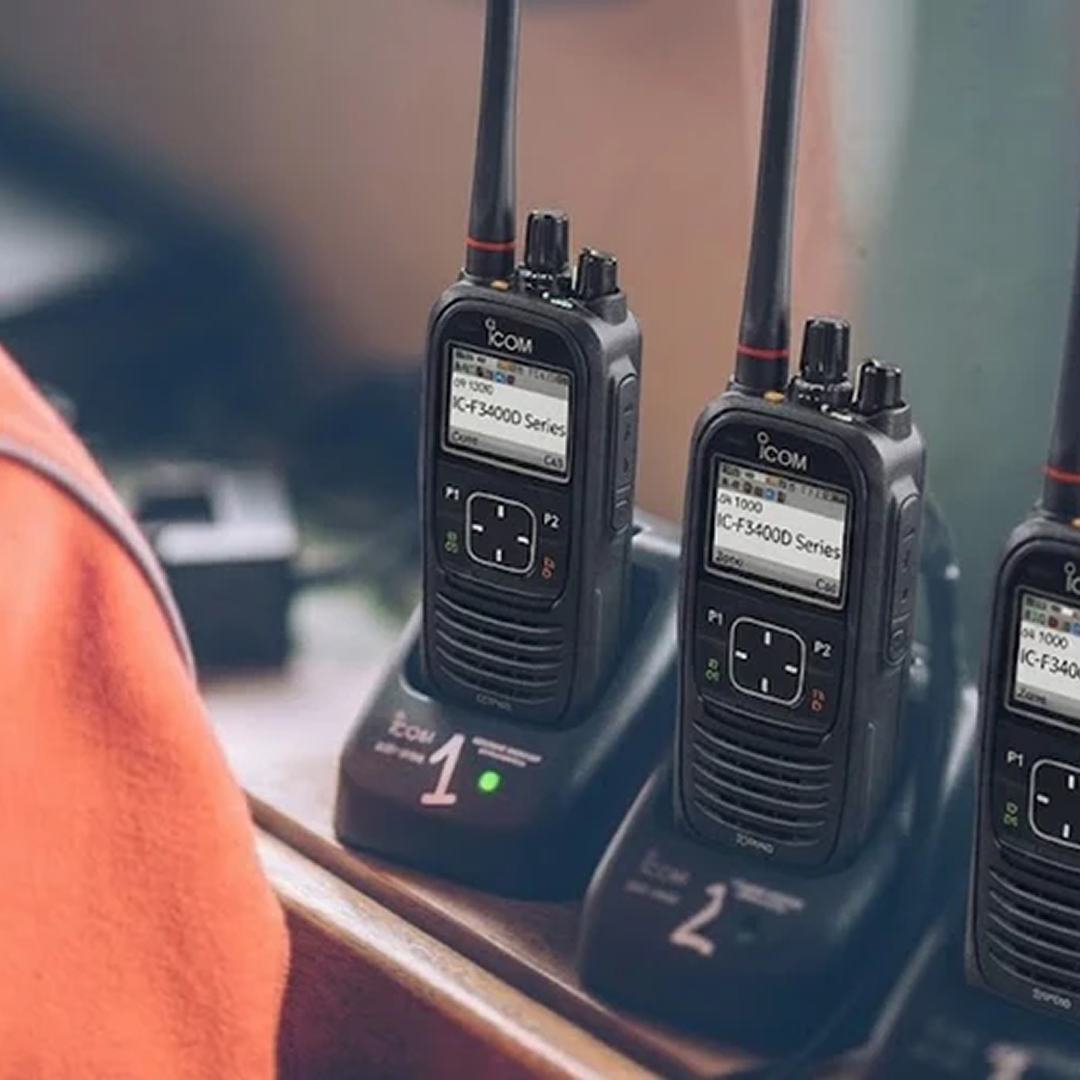
Introduction to UHF and VHF Radio Communication
In an era dominated by satellites, fiber optic cables, and 5G networks, many people assume that radio communication technology has become outdated and irrelevant. The truth is actually the complete opposite. UHF and VHF radio systems remain absolutely critical infrastructure for industries where reliability, simplicity, and range matter far more than raw connection speed. From maritime navigation to emergency disaster response, radio communication continues to serve as an irreplaceable backbone for mission-critical operations around the world every single day.
Understanding UHF and VHF Frequencies
Before exploring why these technologies remain so essential, it is important to understand the fundamental difference between UHF and VHF frequencies and how each one serves a distinct and valuable purpose across different industries and operating environments.
What Is VHF Very High Frequency
VHF operates between 30 MHz and 300 MHz and is ideal for long-range communication in open and unobstructed environments. It is the preferred choice for marine operations, aviation communication, and rural land operations where signals need to travel great distances across open terrain with minimal interference from buildings or dense vegetation along the way.
What Is UHF Ultra High Frequency
UHF operates between 300 MHz and 3 GHz and is specifically designed to penetrate buildings, dense vegetation, and complex urban environments far more effectively than VHF signals can. UHF is widely used across land mobile radio networks, public safety communication systems, and industrial operations where signals need to travel through physical obstacles and structures reliably.
Key Advantages of UHF and VHF Radio Solutions
Extreme Reliability in All Conditions
Radio communication does not depend on internet infrastructure, satellite uplinks, or cellular towers to function. Even when satellite networks go down, cellular systems become overloaded, or internet connectivity fails completely, UHF and VHF radio systems continue operating without any interruption whatsoever. This makes radio an absolutely essential primary and backup communication tool for emergency services, military operations, mining, maritime, and any industry where communication failure is simply not an option.
Long Range Coverage Without Infrastructure
VHF signals can travel hundreds of kilometers across open marine and rural environments, connecting remote teams and field operators without requiring any expensive ground infrastructure to be built or maintained. This gives organizations working in remote areas a powerful communication tool that can be deployed quickly and cost-effectively across enormous geographic areas without waiting for network towers or cables to be installed.
Low Cost and Easy Deployment
Compared to satellite systems, fiber networks, or cellular infrastructure, UHF and VHF radio networks are remarkably cost-effective to deploy and maintain across even the largest geographic coverage areas. Hardware is affordable, installation is straightforward, and ongoing maintenance costs remain low, making radio an attractive choice for organizations that need wide-area communication coverage without a large capital investment upfront.
Instant Push to Talk Group Communication
One of the most valuable and unique advantages of UHF and VHF radio is the ability to communicate instantly with an entire team or group with a single press of a button. There are no dial tones, no connection delays, and no call setup times. When a team member speaks, every person on the channel hears it immediately, making radio the fastest and most efficient group communication tool available for field operations, emergency response, and coordinated industrial work
Works in GPS Denied and Remote Environments
Unlike cellular and internet-based communication systems that depend entirely on network infrastructure, UHF and VHF radio systems function perfectly in GPS-denied zones, underground tunnels, deep forest environments, and areas that have never had any cellular or internet coverage. This makes them uniquely suited for mining operations deep underground, jungle expeditions, remote border patrol operations, and any scenario where modern digital networks simply do not exist.
How Hybrid Networks Delivers UHF and VHF Solutions
At Hybrid Networks, our UHF and VHF radio solutions are engineered for organizations that operate in the most demanding and communication-challenging environments on Earth. We design, deploy, and fully support customized radio communication networks that integrate seamlessly with our broader satellite and IoT connectivity ecosystem. Whether you need a standalone radio network or a fully hybrid communication system that combines radio, satellite, and cellular technologies together, our team of certified experts will build the right solution for your specific operational requirements and budget.
Industries That Rely on UHF and VHF Radio
Maritime and Coastal Operations
The maritime industry has depended on VHF radio for safe navigation and vessel-to-vessel communication for decades. Coastal patrols, port operations, fishing fleets, and commercial shipping all rely on VHF as their primary and most dependable communication channel across open water where no other network infrastructure exists at all.
Mining and Heavy Industry
Underground and open-pit mining operations depend heavily on UHF radio networks to maintain constant communication between surface control rooms and workers deep inside mine shafts and tunnels. Radio ensures that safety alerts, operational instructions, and emergency signals reach every team member instantly without relying on any external network infrastructure.
Public Safety and Emergency Services
Police, fire, and emergency medical services around the world rely on UHF and VHF radio as their primary communication platform during emergencies, natural disasters, and large-scale crisis situations. When cellular towers collapse and internet infrastructure fails, radio networks remain standing and keep first responders coordinated and connected throughout the entire emergency response effort.
The Future of UHF and VHF Radio in a Hybrid World
UHF and VHF radio technology is not fading away. It is evolving and integrating with modern satellite and digital communication systems to create powerful hybrid networks that combine the best of every technology available today. At Hybrid Networks, we believe that the strongest communication infrastructure is one that uses every available tool together intelligently. Radio provides the reliable foundation, satellite provides the global reach, and IoT provides the data intelligence that modern businesses need to operate efficiently and safely anywhere in the world. Contact Hybrid Networks today to learn how our UHF and VHF radio solutions can strengthen your communication infrastructure and keep your teams connected no matter where they work.